
If your garage door just stopped working, you probably want to know what this is going to cost. That’s a fair question — and one we hear every single day at our Tempe and Gilbert offices. The honest answer is that garage door repair costs vary widely depending on what’s actually wrong, and there’s no way to give an accurate number without seeing your specific door and diagnosing the problem.
What we can do is walk you through the factors that affect pricing so you know what to expect before you call. Understanding what goes into a repair helps you ask the right questions, avoid surprises, and make an informed decision when your technician presents your options.
Spring Replacement — The Most Common Repair in Phoenix
If we had to pick the one repair that keeps our phones ringing, it’s broken springs. The Phoenix heat is brutal on garage door springs — metal expands and contracts with every temperature swing, and in a city where it’s 115 degrees at 3pm and 85 degrees at midnight, that’s a lot of daily stress on a coiled piece of steel.
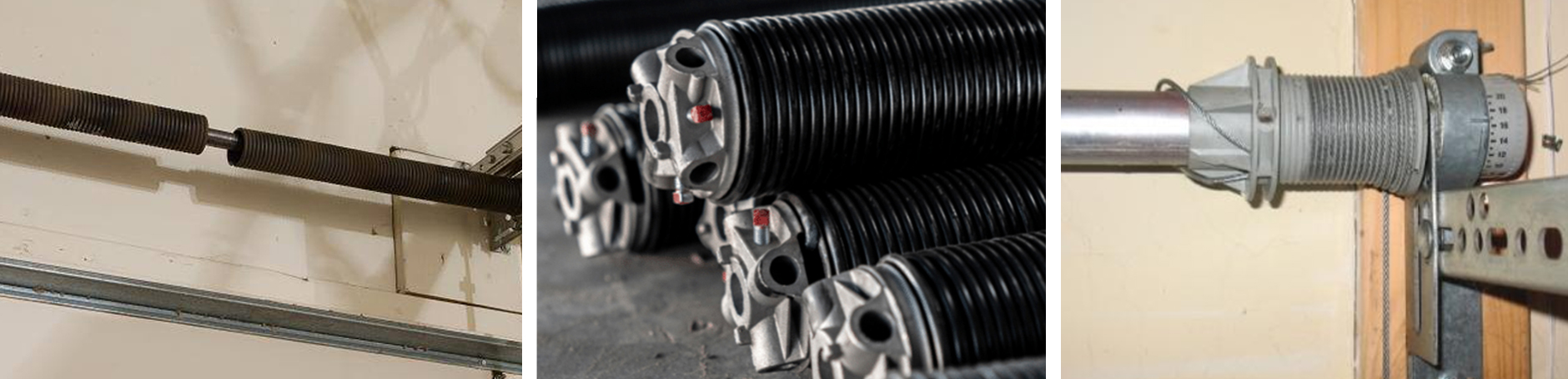
Most Phoenix homes use torsion springs — the large springs mounted on a metal shaft above the door. When one snaps, and you’ll know because it sounds like a gunshot in your garage, the door becomes effectively inoperable. Don’t try to open it manually. A garage door without working springs weighs 150 to 250 pounds, and people get seriously hurt every year trying to muscle them open.
What affects the cost of spring replacement:
Spring type and size: Torsion springs and extension springs have different price points. The size of the spring — determined by your door’s weight and height — also affects cost. A single-car door uses lighter springs than a heavy double-wide insulated door.
One spring or two: If one spring broke, the other one is usually close behind since they were installed at the same time and have the same wear. Replacing both at once is typically more cost-effective than paying for a second service call in a few weeks when the other one goes.
Spring quality and warranty: Higher-cycle springs cost more upfront but last significantly longer. In Arizona’s climate, standard springs may last 5 to 7 years, while high-cycle springs can go considerably longer. Your technician can walk you through the options and help you decide what makes sense for your situation.
One thing worth knowing: spring lifespan in Arizona is shorter than what manufacturers rate them for. A spring rated for 10,000 cycles might last 7 to 10 years in a mild climate, but here in Phoenix, the constant thermal cycling accelerates fatigue. If your springs are approaching the 6- to 8-year mark and you haven’t had issues yet, it doesn’t mean they’re fine — it means they’re getting close.
Cable Repairs and Replacements
Garage door cables work alongside the springs to lift and lower the door safely. When a spring breaks, it sometimes takes a cable with it. Other times, cables fray and eventually snap on their own after years of use. You’ll notice a cable problem when the door hangs crooked — one side drops lower than the other — or when you see a loose cable dangling near the bottom bracket.
Cable replacement is one of the more straightforward repairs we do, and most jobs are completed in under an hour. The cost depends on how many cables need replacing and whether any related hardware (drums, bottom brackets) is also damaged. If both cables show signs of wear, replacing them together saves you a return visit.
Roller and Track Repairs
Rollers are the small wheels that guide your door along the metal tracks on either side of the opening. Over time — especially in the Arizona dust — they wear down, crack, or seize up. The telltale sign is noise: if your garage door sounds like it’s grinding metal every time it moves, your rollers are probably shot.
What affects roller replacement cost:
Number of rollers: Most garage doors have 10 to 12 rollers. Sometimes only a few need replacing; sometimes the whole set is worn. Your technician will inspect all of them and recommend what actually needs attention — not everything needs replacing every time.
Roller material: Nylon rollers are quieter, smoother, and longer-lasting than steel rollers. Upgrading from steel to nylon is worth considering, especially if your garage is attached to your living space and the noise is driving you crazy. Nylon costs more but eliminates the need for regular lubrication.
Track repairs — bending a track back into alignment, fixing a loose mounting bracket, or replacing a damaged section — vary based on how severe the issue is. If the door is fully off-track, the job is more involved than a simple realignment. Either way, your technician will assess it on-site and explain what’s needed.
Panel Replacement
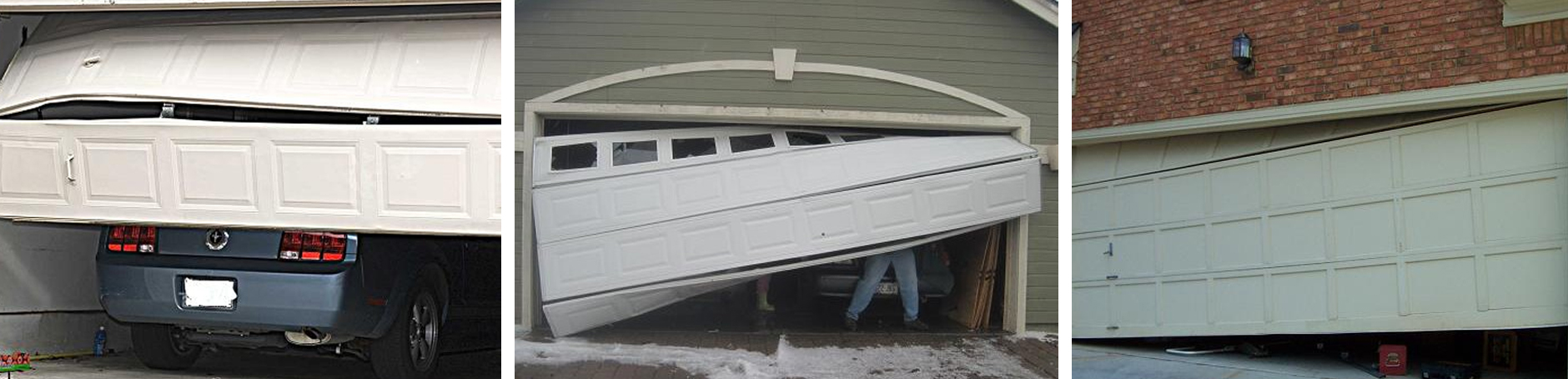
Garage door panels get damaged more often than you might think. A car bumper taps the bottom panel, a kid’s basketball hits it just right, or a monsoon gust catches it at the wrong angle. Sometimes it’s purely cosmetic — the door works fine but looks terrible. Other times a damaged panel affects the door’s balance or seal.
Panel replacement pricing depends on several factors:
Door brand and model: Panels are brand-specific. An Amarr panel is different from a Clopay panel, and pricing varies between manufacturers.
Panel style and material: A basic raised-panel steel replacement is different in cost from a carriage-house or custom-finish panel.
Availability: This is where older doors can get expensive. If your door is 20+ years old and the manufacturer has discontinued that specific panel design, a matching replacement may not exist. In those cases, we’ll discuss whether a full door replacement makes more sense financially than trying to match an obsolete panel.
For newer doors from major brands, panels are typically readily available and replacement is straightforward. For older or discontinued doors, your technician will check availability before recommending a path forward.
Opener Repair and Replacement
Garage door opener problems are the second most common call we get after springs. Openers have motors, gears, circuit boards, and remote receivers — there’s a lot that can go wrong over a decade of daily use.
The cost depends largely on whether the opener can be repaired or needs to be replaced:
Repairable issues: A stripped gear, a failing circuit board, a misaligned safety sensor, or remote programming problems can usually be repaired without replacing the entire unit. These are generally the more affordable fixes.
Full replacement: If the motor is burned out, the unit is old enough that parts are no longer manufactured, or the opener is so outdated that repair costs approach the cost of a new unit, replacement makes more sense. New openers range from basic chain-drive models to smart Wi-Fi belt-drive units with battery backup — your technician will walk you through what’s available and help you choose based on your needs and budget.
One factor people don’t always consider: if your opener is straining or running longer than usual to open the door, the problem might not be the opener at all. It might be worn springs forcing the motor to do more work than it was designed for. A technician who diagnoses the real problem — rather than just replacing the obvious thing — can save you money.
Weatherseal Replacement
This is the repair Phoenix homeowners most often overlook until it’s causing real problems. The rubber seal at the bottom of your garage door — plus the seals around the sides and top — keep out dust, insects, heat, and rainwater. In the Arizona sun, these seals dry out and crack within a few years.
Weatherseal replacement is typically one of the more affordable garage door repairs, and the impact is immediately noticeable — less dust on your garage floor, fewer insects getting in, and a garage that doesn’t feel quite as much like an oven in July. If your seal has visible cracks or gaps, or if you can see daylight under the door when it’s closed, it’s time.
What Makes a Repair Cost More (and What Doesn't)
A few factors affect pricing beyond the specific type of repair:
Door size and weight: A standard single-car door is simpler to work on than a double-wide or custom oversized door. Heavier doors require heavier springs and more powerful openers, and the components cost more.
Door age and brand: Newer doors from current manufacturers have readily available parts. Older or discontinued doors sometimes require special-order components or custom fabrication, which adds cost and time.
Number of issues: Sometimes what seems like one problem is actually two. A broken spring may have also damaged a cable. A door that’s been running on bad rollers for months may have worn its tracks. Your technician will assess the full situation and explain everything before starting work.
What doesn’t affect our pricing: where you live. We charge the same whether you’re in central Phoenix or out in Goodyear. No extra travel fees, no location surcharges — our pricing is based on the work, not the drive.
How to Avoid the Biggest Repair Bills
The single best thing you can do for your garage door is annual maintenance. A tune-up includes lubricating all moving parts, checking spring tension, inspecting cables for fraying, testing the opener’s safety features, and tightening hardware that’s loosened over time. It catches small problems before they become big ones — a worn roller spotted during maintenance is a minor fix, but that same roller ignored for another year can cause the door to go off-track, which is a much bigger job.
The other thing? Don’t ignore noises. A grinding, squealing, or popping sound is your door telling you something is wearing out. Calling early almost always costs less than calling after it breaks.
The Best Way to Know Your Cost
Every garage door is different — different brand, different age, different components, different wear patterns. That’s why we don’t quote prices over the phone or on our website. A number without context can be misleading, and we don’t want you making decisions based on a guess.
What we do instead: a technician comes to your home, inspects your door and all its components, diagnoses the actual problem, and presents your options with clear pricing before any work begins. The price we quote on-site is the price you pay — no hidden fees, no surprise charges after the job is done. You know exactly what you’re getting and exactly what it costs before you say yes.
Call us at 602-495-1555 to schedule an on-site visit. We offer same-day service 7 days a week across Phoenix, Scottsdale, Mesa, Chandler, Gilbert , Tempe, Glendale, Peoria, Surprise, and Goodyear.